



Baby Sleep Products & Sleep Cues I Recommend After 20+ Years as a Celebrity Sleep Nanny
The Exact Sleep Environment I Create For Families
The baby sleep products, sleep cues and routines I use when I fly into homes across Australia helping exhausted families get their babies sleeping.

The Sleeping Sack I Recommend
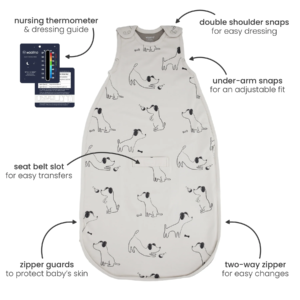
Woolino 4 Season Merino Sleeping Bag
One of the most common questions parents ask me is:
“Is my baby too hot or too cold overnight?”
It’s understandable. With so many TOG ratings, fabrics, sizes and seasonal options available, choosing a sleeping bag can quickly become confusing.
A sleeping bag will not teach your baby to sleep independently, but a comfortable and consistent sleep environment does matter.
After thousands of nights supporting babies, I prefer simple, high-quality products that reduce unnecessary guesswork for parents.
The sleeping sack I recommend is made with a high merino wool content — higher than any of it’s Australian competitors — which naturally helps regulate your baby’s body temperature throughout the year.
Unlike many fabrics that simply trap heat, merino wool works with your baby’s body. In cooler weather it helps retain warmth, while in warmer weather it helps release excess heat and moisture.
This means your baby stays warmer in winter, cooler in summer and more comfortable during those unpredictable seasonal changes in between.
Merino wool is also naturally breathable, moisture-wicking, hypoallergenic and exceptionally soft, making it ideal for babies with sensitive skin.
For many families, one of the biggest benefits is simply having less guesswork. Instead of constantly worrying whether your baby is too hot or too cold overnight, the fabric itself helps create a more stable sleep environment.
I recommend using the sleeping sack for both daytime naps and overnight sleep. Over time, the simple act of changing into the sleep sack becomes a sleep cue in itself.
Another reason I recommend Woolino is longevity.
One of the first questions parents ask is:
“How can the same sleeping bag fit a 2-month-old and a 2-year-old?”
The answer is clever design.
The lower half of the sleeping bag is intentionally roomy and bell-shaped, giving babies plenty of space to move their legs comfortably while supporting healthy hip development.
The upper body is adjustable.
For younger babies, underarm snaps reduce the size of the arm openings, creating a secure fit around the chest and preventing the sleeping bag from riding up or shifting.
As your baby grows, double shoulder snaps allow the fit to be adjusted to accommodate a longer torso and broader chest.
The result is a sleeping bag that grows with your baby from approximately 2 months (approx. 3-4 Kg) through to 24 months, dramatically reducing the need to constantly size up and purchase new sleeping bags every few months.
I recommend having at least two quality sleeping bags so one is always available between washing and overnight accidents.
Woolino 4 Season (2–24 months)
Save 10% on Your Woolino Purchase
This link automatically generates a Woolino discount code for my readers.
The code will automatically generate at checkout after you select the Woolino design you’d like to purchase.
The Sleepy Time Lullaby™

Long before I became known as Australia’s FIFO overnight baby sleep consultant, I started my career as a maternity night nurse caring for babies in private homes in the UK.
The Sleepy Time Lullaby™ began with one baby I cared for many years ago.
I was working as a maternity night nurse in a beautiful tiled mansion, and every cry seemed to echo through the house.
She cried and cried.
I remember standing there in the middle of the night, exhausted and wondering if she was ever going to stop.
Instinctively, I began kind of talking to her, then singing my words to the tune of Kumbaya.
I told her it was sleepy time.
That she was safe.
That it was time to rest.
Before long, those words became:
“Sleepy time, my love, sleepy time.”
Night after night, I found myself singing the same simple message. Over time, it became more than a song. It became a way of communicating with babies about what was happening next.
The Sleepy Time Lullaby™ was never designed to entertain babies or distract them into sleep.
It was designed to prepare them.
To reassure them.
To help them understand that sleep was coming.
Over time, it became part of the way I prepare babies for sleep — not as a trick or distraction, but as communication.
Influenced by RIE principles, I believe babies deserve to understand what is happening to them. It lowers their anxiety when they know what is happening next. The lullaby becomes a gentle conversation: a predictable cue letting your baby know sleep is coming.
Just as importantly, it is sung by the person caring for them.
Long before babies understand language, they are incredibly sensitive to tone, rhythm, intention and presence.
A caregiver’s voice is soothing because it is real. It carries warmth, authenticity and reassurance in a way no recording, sound machine or app ever can.
The energy behind the words matters.
The intention matters.
Your presence matters.
Your baby is not simply hearing a lullaby.
They are experiencing a familiar person calmly communicating what is happening.
What to expect.
What comes next.
That it is time to rest.
That sleep is coming.
The predictability lowers anxiety.
Over time, the words become familiar and meaningful through repetition.
The chorus — “Sleepy time, my love, sleepy time” — eventually becomes more than part of the bedtime routine. It becomes a sleep phrase that can be used during overnight resettles.
By hearing the same words at bedtime and again during overnight waking, your baby is gently reminded of what is expected.
Sleepy time.
Time for sleep.
Sometimes babies simply need the reassurance of hearing the same message again.
The Sleepy Time Lullaby™
The Sleep Cue Book
Goodnight Moon
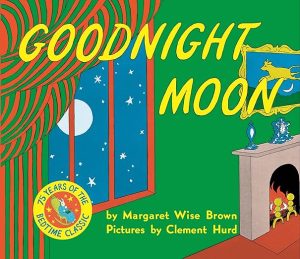
A bedtime book is not about entertaining your baby before sleep.
It is a visual cue.
A respectful way of helping your baby understand what comes next.
One of the foundations of my approach is respectful communication. Babies feel more secure when we gently prepare them for transitions rather than simply doing things to them.
A simple bedtime book becomes part of that communication.
A sleep cue book says:
“It is time to slow down. It is time to rest. Sleep is coming soon.”
Many baby books are beautifully marketed but are actually too long or stimulating before sleep.
When babies become overtired or frustrated, parents can end up feeling defeated trying to finish a bedtime routine that was supposed to feel connecting.
Goodnight Moon has remained a favourite for generations because it does the opposite.
It celebrates winding down.
It celebrates rest.
The same book, every sleep time, becomes a familiar ritual.
Over time, many babies begin recognising the cue — and I often see babies start relaxing, rubbing their eyes or preparing for sleep as soon as their sleep cue book appears.
This final moment of connection happens before the Sleepy Time Lullaby™, helping your baby feel safe, connected and ready to let go into sleep.
A little note: don’t worry if your baby is not interested in the book straight away.
Your baby may simply be too tired, too young, or not quite developmentally ready to sit and engage with a story before sleep.
The goal is not to push through and “finish the book”.
A respectful approach means noticing what your baby is communicating and adjusting.
“You don’t want to read the book tonight? I think you’re ready for sleepy time. Let’s have a cuddle and sing our Sleepy Time Lullaby.”
Over time, the book becomes familiar. Not because it was forced, but because it became a predictable, safe and enjoyable part of preparing for sleep.
Comforter

A comforter can become one of the most powerful sleep cues in your baby’s sleep environment.
It is not about creating dependency.
It is about creating familiarity.
Just like the sleeping sack, sleep cue book and lullaby, a comforter becomes part of the predictable sequence that helps your baby understand what is happening next.
This is one item where quality really matters.
Babies suck comforters, chew them, rub them on their face, drag them around, sleep with them, vomit on them, throw them out of the cot, take them on holidays and reach for them when they are tired, teething or unwell.
I generally gravitate towards high-quality baby brands, but comforters are one area where I look beyond the label and pay close attention to the materials and design.
Many expensive comforters are surprisingly made largely from polyester fabrics. Parents often assume expensive means high quality, when in reality they may simply be paying for branding, packaging or aesthetic appeal.
When it comes to a comforter, I want all three.
Quality materials.
Thoughtful design.
Beautiful aesthetics.
My preference is always for 100% cotton, breathable fabrics that feel soft and comforting against your baby’s skin and can withstand years of washing, cuddling and everyday use.
Design matters too.
I am also a firm no when it comes to battery-operated comforters with built-in white noise, lights, music players or other electronic features.
In my experience, these products often solve a problem that doesn’t actually exist.
A comforter should be a comforter.
Its job is to be familiar, predictable and available whenever your baby needs it.
The moment batteries go flat, sounds stop working, settings get changed or the product is forgotten at home, part of the sleep routine disappears too.
Many of these electronic comforters are also surprisingly difficult to wash properly and are often made from lower-quality synthetic fabrics.
I would much rather invest in a beautifully designed comforter made from quality natural fibres than a gadget disguised as a comforter.
I prefer sleep cues that travel well, last for years and don’t rely on technology.
Simple, familiar and reliable will almost always outperform gimmicks.
One feature I particularly like is a larger comforter head.
Many babies naturally place their comforter over their face while settling or sleeping. A comforter with a larger, slightly weighted head is more likely to gently roll away rather than remain flat across the face when not being actively held.
The comforter I recommend combines beautiful design with practical function. It looks lovely in the nursery, feels beautiful in little hands, and is made from quality breathable materials that support everyday use.
Combined with quality natural fibres, thoughtful design and beautiful aesthetics, it creates a comforter that is soft, breathable, durable and genuinely designed to be loved for years.
When purchasing a comforter, always buy two identical ones.
Trust me on this.
At some point one will need washing, become misplaced, get left behind on holiday, or mysteriously disappear at the exact moment your baby needs it most.
Having a second identical comforter can save a great deal of stress.
How to Introduce a Comforter
Ideally, begin establishing your baby’s relationship with their comforter long before they are developmentally ready to sleep with it.
When you first purchase your comforters, place them in your bed for around a week so they absorb your familiar scent.
During feeds, cuddles, story time and the bedtime routine, place the comforter between you and your baby so it gradually becomes associated with feelings of comfort, connection and sleepy time.
For younger babies, the comforter can remain nearby and visible but out of reach during sleep.
As your baby grows, they will already have a positive association with it because it has quietly been part of the bedtime routine all along.
Over time, the comforter becomes another predictable sleep cue. Not because anyone forced an attachment to it, but because it became part of a familiar and reassuring sleep sequence.
100% organic cotton, breathable, machine washable and beautifully simple yet high quality fabric — exactly what I look for in a comforter babies will actually use every day.
View Elodie Baby Comforter Cuddle Blanket Blinkie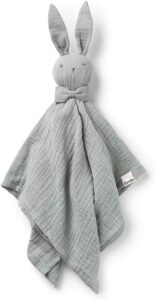
Sound Machine
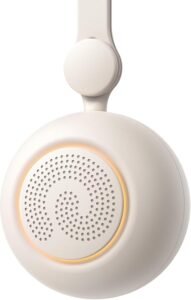
A sound machine can be a helpful part of creating a consistent sleep environment, especially when your baby is sleeping in different rooms, travelling, or adjusting to household noise.
Like every sleep cue, the goal is not to make your baby dependent on noise.
The goal is to create familiarity.
A calm, consistent sound can help signal that it is time to rest.
I’ve worked in hundreds of nurseries over the years, and sound machines are one area where I’ve found the most expensive option is not always the best.
While I often recommend investing in higher-quality products — particularly when it comes to fabrics and items your baby uses every day — sound machines are different.
Many premium sound machines look beautiful, but I’ve found they can be impractical, with artificial-sounding tracks, poor volume control or unnecessary features.
I discovered this little sound machine by chance while working overnight in a client’s nursery, and it has become the one I recommend most often.
The “shhh” sound is realistic and calming, not harsh or artificial-sounding like many other baby sound machines.
It also has Bluetooth, is portable for travel, and is simple to use both at home and on the go.
At under $100, it is one of those rare baby products that offers excellent quality and value without the premium price tag.
Portable, USB-C charging, simple to use, and with a realistic “shhh” sound that sounds like a human.
View Sound MachineAromatherapy
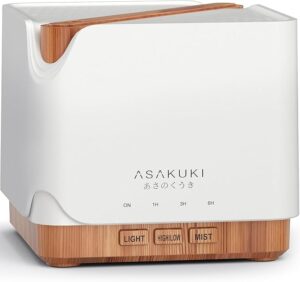
Aromatherapy is one of the most overlooked elements of a baby’s sleep environment.
For me, it is not an optional extra.
It is a must.
After more than 20 years working with babies, I have seen first-hand how differently babies experience the world.
Some babies seem able to sleep anywhere.
Others are highly sensitive, alert, easily overstimulated and constantly taking in information from their environment.
These babies often benefit enormously from a calm, nurturing sleep environment.
Aromatherapy is something I studied many years ago and have used throughout my career working with babies and families.
One of the biggest misconceptions is that all essential oils are suitable for babies.
Many are not.
Some can be surprisingly stimulating and are the exact opposite of what we want before sleep.
The two oils I return to again and again are lavender and frankincense.
Over the years, I have watched many babies become noticeably calmer, more relaxed and more settled when appropriate aromatherapy becomes part of their bedtime environment.
Not because aromatherapy is a magic solution.
But because relaxation matters.
Sleep is a biological process, and babies who are calm, comfortable and relaxed often find it easier to let go into sleep.
Aromatherapy should never overpower a room.
It should sit quietly in the background, gently supporting relaxation and signalling that it is time to slow down and rest.
Many modern homes rely heavily on heating and cooling, which can contribute to a dry sleep environment overnight.
During the newborn months, I often recommend using an ultrasonic diffuser with water only, functioning simply as a cool mist humidifier to add moisture back into the air.
As babies get older, I love thoughtfully introducing gentle aromatherapy as another part of their sleepy time environment.
Frankincense has been valued for thousands of years and is traditionally associated with cleansing and calming spaces.
Scientific studies and traditional aromatherapy suggest that frankincense may have antimicrobial properties and can help reduce airborne bacteria and mould when diffused appropriately.
Combined with lavender, it creates a beautiful sleep environment that feels calm, peaceful and nurturing.
Used thoughtfully, aromatherapy becomes another familiar sleep cue — a calm environment that gently communicates that it is time to rest.
My Recommended Aromatherapy Setup
Simple, calming and supportive of a peaceful sleep environment.
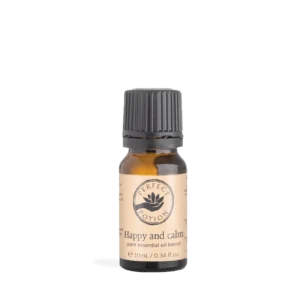
Perfect Potion Essential Oils have given me a discount code for readers. Use code raqueltara for 15% off.
View Frankincense Essential Oil
View 100% Essential Oil Baby Sleep Recipe ‘Happy and Calm’
Nasal Aspirator
One of the most overlooked reasons babies struggle to sleep is simple congestion.
A baby with a blocked nose can find feeding more difficult, settling more difficult and staying asleep more difficult.
Sometimes the problem is not sleep at all.
Sometimes the problem is breathing comfortably.
I often recommend using a nasal aspirator as part of the bedtime routine whenever a baby is congested due to illness, teething or seasonal allergies.
A quick clear-out of the nose before bed can make a remarkable difference to overnight comfort.
There are many aspirators on the market, including some very expensive options.
This is another area where I don’t believe you need to spend a fortune.
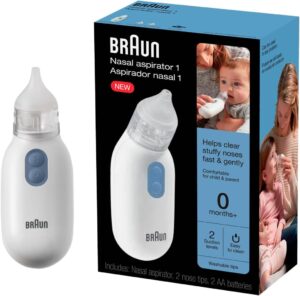
The Braun Nasal Aspirator performs exceptionally well, is easy to clean, simple to use and costs significantly less than many of its competitors.
I particularly like that it offers two suction levels and includes different tip sizes for younger babies and older children.
Most importantly, it actually works.
Parents often assume congestion is something babies simply have to push through.
In reality, helping a congested baby breathe more comfortably before sleep is one of the simplest ways to support a better night’s rest.
Simple, effective, easy to clean and excellent value for money.
View Braun Nasal AspiratorBaby Monitor
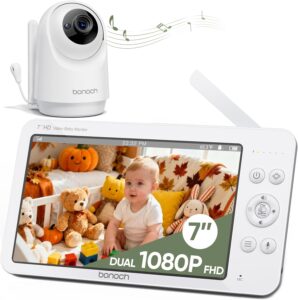
Parents often ask me which baby monitor I recommend.
One of the main reasons I recommend this monitor is that it does not rely on Wi-Fi.
Over the years, I have deliberately chosen not to use Wi-Fi monitors in nurseries.
I appreciate that many parents feel differently, but my preference has always been for a dedicated monitor system that works independently of the home’s internet connection.
There is no need to worry about internet outages, app updates, passwords, pairing phones, network issues or whether the monitor is connected properly.
It simply works.
I also find many parents sleep better knowing their nursery monitor is operating on its own dindependent system rather than through Wi-Fi or remote progamming.
The monitor offers excellent picture quality, reliable performance and straightforward operation without unnecessary complexity.
When choosing a monitor, I also recommend thinking about the complete setup from the beginning.
Many parents purchase a monitor and stand separately, only to discover they don’t fit together properly or require awkward modifications to make them work.
This monitor pairs perfectly with the stand I recommend below, creating a safe, practical and reliable monitoring system that grows with your baby.
A reliable non-Wi-Fi monitor with excellent picture quality that pairs perfectly with the monitor stand below.
View Baby MonitorMonitor Stand
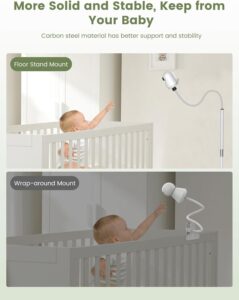
If there is one monitor accessory I strongly recommend, it is a monitor stand.
Most parents focus on choosing the monitor itself and give very little thought to how it will actually be positioned.
In reality, positioning is often more important than the monitor.
Many families initially attach cameras directly to the cot.
This usually works well for a few months.
Then babies become mobile.
Before long, little hands are pulling cords, moving cameras, blocking the view or hiding completely out of sight.
A monitor stand creates a safer, more practical and more reliable setup from the beginning.
It provides a consistent overhead view while keeping cords and equipment well away from curious little hands.
As your baby grows, the stand continues to work without constant repositioning or adjustment.
This is also why I recommend choosing your monitor and stand together.
Not all monitors pair well with all stands.
Many parents purchase them separately only to discover they don’t fit properly or require awkward modifications.
The monitor I recommend above works beautifully with this stand, creating a complete setup that is safe, practical and easy to use.
Think of the monitor and stand as one purchase rather than two separate purchases.
Compatible with the monitor recommended above and designed to provide a safe, reliable overhead view as your baby grows.
View Monitor StandNeed Sleep More Than Sleep Products?

The products on this page support the sleep environment I create for the families I support.
They are the same products, sleep cues and routines I regularly recommend during my overnight sleep programs.
But sometimes families need more than products.
Sometimes they need sleep.
Real sleep.
The kind that comes from having an experienced professional in the home helping both baby and parents through the process.
As Australia’s leading FIFO overnight baby sleep consultant, I travel throughout Australia providing hands-on overnight sleep support for families with babies aged 0–12 months.
Before becoming a baby sleep consultant, I worked internationally throughout the UK, Europe and the Middle East as a professional maternity night nurse and celebrity sleep nanny, supporting high-profile and celebrity families.
Today, I bring that same hands-on approach to families throughout Australia.
Unlike traditional sleep consulting, I don’t simply tell parents what to do.
I work alongside families in their own homes, helping babies learn healthy sleep habits while parents finally get the rest they need.
The products on this page are wonderful tools.
But it is the consistency, communication, predictability and support behind them that ultimately creates lasting change.
Australia-wide overnight baby sleep support for families who want the sleep training done for them.
Learn More