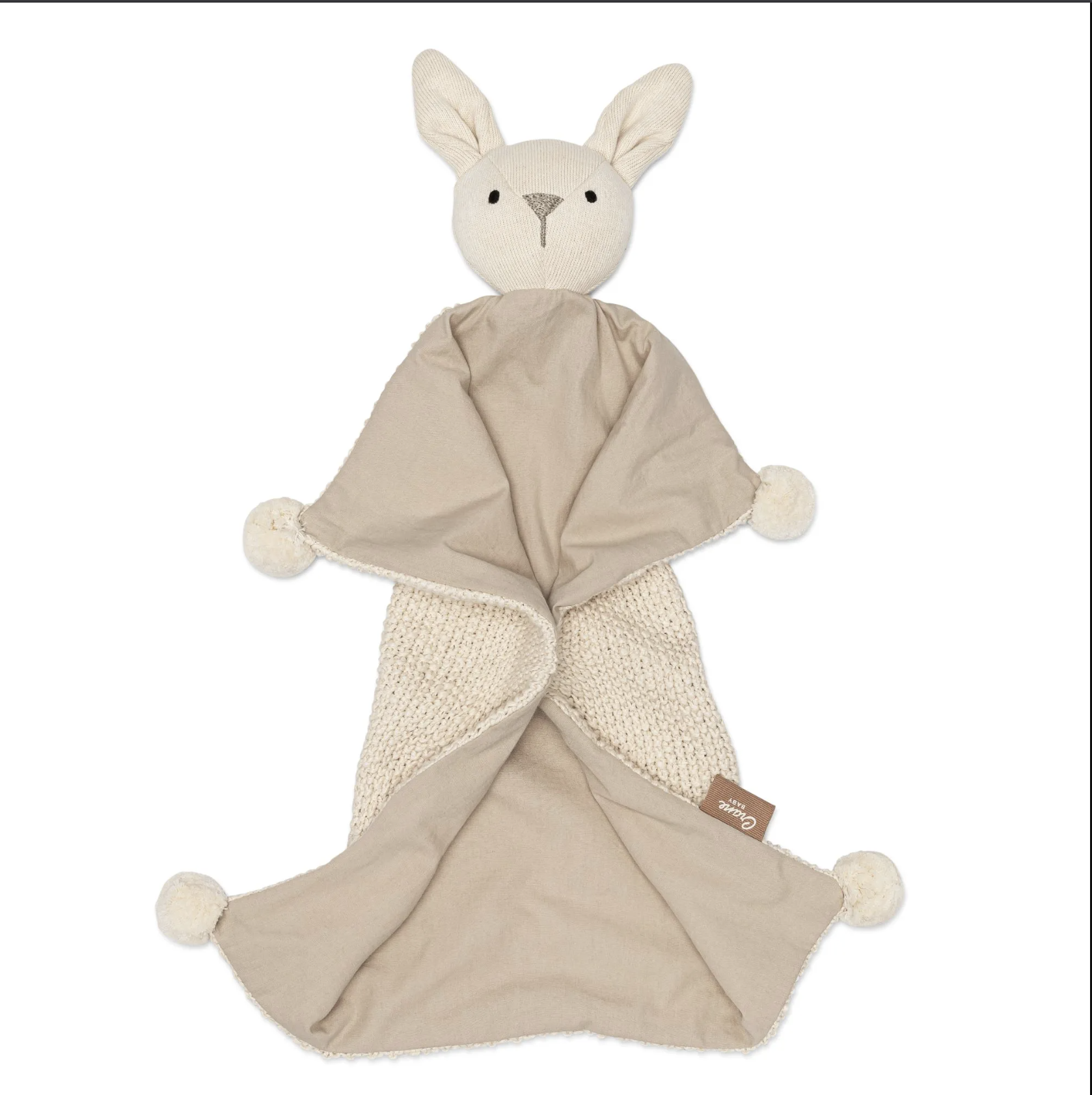
Comforters & Baby Sleep — Common Questions
What age should you introduce a comforter?
Most babies begin developing attachment to a comforter somewhere between approximately 4–8 months, although every baby is different.
The ideal timing is usually before strong sleep associations become deeply established around things like:
• feeding to sleep
• rocking to sleep
• dummy dependency
• constant physical contact to remain asleep
A comforter works best when it gradually becomes associated with calmness, familiarity, sleep and emotional regulation over time.
Can a comforter help babies sleep better?
Yes — when introduced consistently and appropriately, comforters can become very powerful sleep associations.
A comforter is often what psychologists refer to as a transitional object.
It helps bridge the gap between complete dependence on a caregiver and a baby’s growing ability to self-regulate and settle more independently.
Many babies use their comforter to:
• transition between sleep cycles
• settle at bedtime
• cope with separation
• manage change
• reduce anxiety around sleep
Comforters can be particularly helpful during:
• cot transitions
• dummy removal
• reducing feeding to sleep
• daycare transitions
• travel
• illness or developmental leaps
How do you introduce a comforter to a baby?
The key is gradual familiarity.
For younger babies, I generally recommend placing the comforter between you and your baby during feeds or cuddles so it begins absorbing both comfort and familiarity.
Then gradually begin incorporating it into sleep routines and leaving it beside your baby during sleep times once age-appropriate and safe to do so according to local sleep safety guidelines.
For older babies, the comforter becomes part of the bedtime rhythm itself.
The important thing is consistency.
The comforter should become associated specifically with:
• sleep
• rest
• calmness
• winding down
Rather than general daytime play.
Can a comforter help replace feeding, rocking or dummy dependency?
Sometimes — yes.
But not instantly.
Comforters are not magic sleep fixes on their own.
What they often do is help soften transitions as other sleep associations are gradually reduced.
For example:
• reducing dummy reliance
• moving away from feeding fully to sleep
• transitioning from rocking to cot settling
A comforter gives babies something familiar and emotionally grounding while these changes are occurring.
Is it ever too late to introduce a comforter?
No — although younger babies often adapt to them more easily.
Even toddlers can develop strong attachment to comforters if introduced consistently and positively over time.
However, older babies who already have very established sleep associations sometimes require more patience during the transition.
What type of comforter is best?
I always recommend:
• buying at least two identical comforters
• choosing breathable natural fibres such as 100% cotton
• completely avoiding overly synthetic fabrics
• choosing something washable, soft and easily replaceable
Babies become attached to very specific textures, smells and familiarity.
So if one gets lost, damaged or left behind somewhere, having an identical backup becomes incredibly important.
Over the years working with babies overnight, I’ve seen comforters become one of the strongest long-term sleep associations many children carry into toddlerhood.